


Advice Blog
How Long Can a Line Marking Machine Really Last? Meet One That’s Still Going Strong

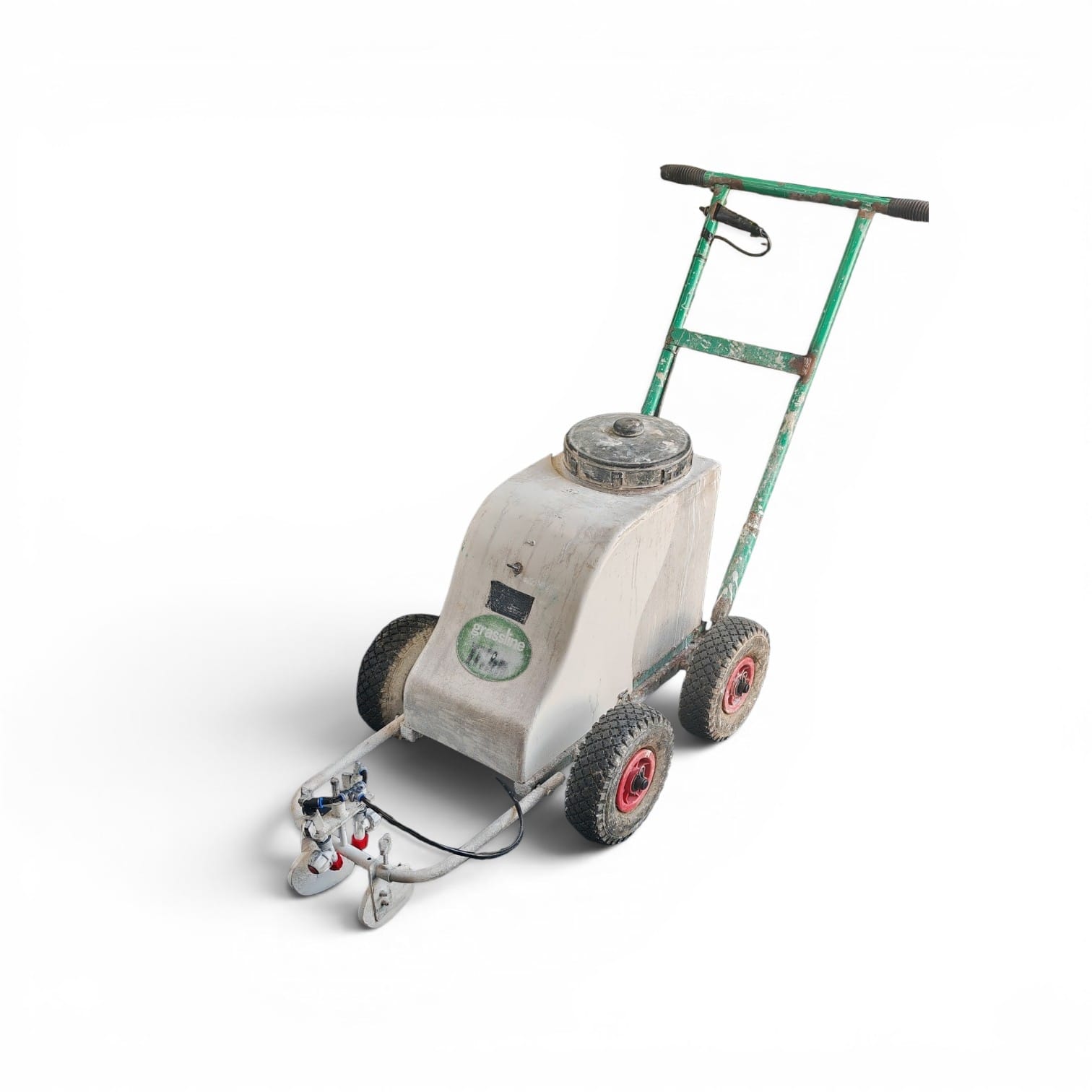
Built to Last: Why Grassline Line Marking Machines Stand the Test of Time
A line marking machine is not something most grounds staff replace every season. It gets wheeled across wet pitches, left in a shed over winter, and put back to work again in spring — year after year. Because Grassline designs and manufactures its own machines in West Yorkshire rather than reselling someone else’s kit, durability is built in from the first design sketch, not left to chance. Here’s what actually makes a Grassline line marking machine stand the test of time.
A Machine Still Doing Its Job, Years Later
The machine pictured above isn’t a showroom model — it’s a working machine with the scrapes and paint spatter to prove it. Frames rust a little, wheels wear down, paint splashes build up on the tank. None of that stops it doing the job it was bought for. That’s the real test of a line marking machine: not how it looks in year one, but whether it’s still marking straight, reliable lines several seasons in.
Why Grassline Machines Are Built to Last
Grassline is the manufacturer, not a reseller — the same team that designs and builds every machine is the team you speak to about it. That matters for durability in a way it doesn’t for a lot of other purchases. There’s no separate factory overseas cutting corners to hit a distributor’s price point, and no warehouse of ageing stock between design and delivery. Machines are built from robust, simple mechanical components with as few points of failure as possible, so there’s less to go wrong after years of use on grass, mud and wet pitches. Read more about what buying direct from the manufacturer actually means for quality control and support.
What Makes a Line Marking Machine Durable?
Durability comes down to a few practical things: solid frames and tanks that can take knocks and weather, wheels and mechanisms built for grass and mud rather than adapted from hard-surface equipment, and a design simple enough that there isn’t much to break. Both spray and wheel-transfer machines are mechanically straightforward by design — the fewer moving parts and electronics involved, the fewer things there are to fail after hundreds of hours in the field.
- Sturdy frames and tanks — built to survive being wheeled over rough or uneven ground and stored outdoors or in a shed between uses
- Grass-specific design — built for natural turf and mud, not adapted from road or car park equipment
- Simple mechanics — fewer moving parts and electronics means fewer things to go wrong over years of use
Simple Maintenance Keeps a Line Marking Machine Running for Years
Longevity isn’t only down to how a machine is built — a bit of regular care goes a long way too. Rinsing nozzles, wheels and the tank after use stops paint drying and clogging the mechanism, checking tyres and moving parts before the season starts catches minor wear before it becomes a problem, and storing the machine somewhere dry over winter protects the frame from unnecessary corrosion. If a part does eventually wear out, Grassline can supply spares and advice directly — being the manufacturer means there’s always someone who knows exactly how the machine goes together.
Do Grassline Machines Hold Their Value?
Because they’re built to last, Grassline machines are often still in service — and still worth buying — long after other equipment would have been scrapped. It’s why clubs and grounds teams sometimes look for a second hand line marking machine or ask about spare parts for an older model rather than replacing it outright. If you’re weighing up a used machine, it’s worth checking the frame, wheels and mechanism for wear and confirming spares are still available. For guaranteed current specification, full support and a warranty, buying new direct from Grassline remains the safest option — but the fact that older machines still hold demand on the second hand market says a lot about how they’re built.
Which Grassline Line Marking Machine Is Right for You?
Grassline’s current range covers the full spread of grounds needs. The Titan Spray Line Marker gives the sharpest, most consistent lines and covers a full pitch fastest — ideal for clubs marking multiple pitches a week. The Ultima Line Marker and Challenger Transfer Wheel Marker are dependable wheel-transfer options — simple, robust machines built for regular seasonal use. Browse the full range of Grassline line marking machines to compare specifications and find the right fit for your grounds.
Pairing the Right Paint With Your Machine
A durable machine is only half the story — the paint you use with it matters just as much for consistent, long-lasting results. Grassline manufactures its full range of grass line marking paints in-house alongside its machines, so compatibility and coverage are never a guessing game. Explore the full range of Grassline line marking paints to find the right formula for your machine and pitch.
Frequently Asked Questions
How long does a Grassline line marking machine last? With basic care — rinsing after use and dry storage over winter — a Grassline line marking machine can stay in reliable service for many years. Simple, robust mechanics mean there’s little to fail over time.
Can I get spare parts for an older Grassline machine? Yes. As the manufacturer, Grassline can supply spare parts and maintenance advice directly, even for older models still in service.
Should I buy a second hand line marking machine? A well-maintained second hand machine can be a good option if the frame, wheels and mechanism are in good condition and spares are available. For a warranty, current specification and full manufacturer support, buying new is the safer choice.
What maintenance does a line marking machine need? Rinse nozzles, wheels and the tank after each use to stop paint drying and clogging the mechanism, check tyres and moving parts before the season starts, and store the machine somewhere dry when not in use.
Is Grassline a manufacturer or a reseller? Grassline manufactures its own line marking paints and machines in-house in West Yorkshire — see buying direct from the manufacturer vs. a reseller for what that means in practice.